Welcoming the RSPB to Goodnestone Park Gardens
Hi Folks, welcome to Summer!
I always start with an apology about how long it takes us to communicate. It’s just Andrew and I; we are just spread too thin! So sorry once again.
To anyone new to us, welcome. Our journey started some ten years ago when dozens of Greenfinches died in my East Kent garden. We chose to learn about the parasite responsible, create solutions, and to make a lot of noise.
Our Journey with the RSPB
Much of our attention was directed at the RSPB. We knew we had to get them onside. It took a while, but we got there.
Almost two years ago, they engaged and began a scientific study. We were able to contribute and share the knowledge we had built up. Month by month, we built bridges to the point that today we have a meaningful and friendly relationship.
Doing the Right Thing by the Birds
Over the years I have been ignored a lot, ridiculed and doubted. Equally, I have met some really nice people.
Edward Meyer of Swift Conservation is, in many respects, my hero. He just offered help, no questions, no hesitation, just help. I asked him why. He said simply, "It’s just for the Swifts!"
I have tried to carry that with me. When I am struggling to progress in some way, my test is "do the right thing by the birds".
Having said that, I am not at all concerned about saying what I think. It’s not about popularity.
Springwatch, Chris Packham and Summer Bird Feeding
Stand by for criticism: Springwatch and Chris Packham.
I will start by saying I love Chris (in a platonic way); he has guts! With the exception of rats (sorry), I love all nature and wish none of it harm. I love foxes and badgers, hares and rabbits. We should leave them all alone with what little unspoiled habitat they have left. Chris is at the front of that, and I admire him for it.
However, in a recent episode, Springwatch addressed wild bird feeding. It was appalling. Here is why.
Journalists have a duty to dig below the surface. They should not just give us the what, but the why.
The RSPB have said don't feed seed in the summer. The RSPB advice was trotted out without any analysis. To be fair, the RSPB haven't offered any, but a candidate for our dimmest bird, the Pheasant, could soon put it together.
The Elephant in the Room: Tube Feeders
The elephant in the room is our old friend the side-port tube feeder. The product that is in half of the nation's gardens. It is responsible for the vast majority of Trichomonosis transmission.
How? It's as follows:
When it rains, the rain penetrates the ports. It creates a teardrop of wet food adjacent to each port. The sun comes out and heats the food. A songbird's body temperature is circa 42°C. If a sick bird feeds, it will leave the parasite in the warm, damp food. The feeder becomes an incubator for the parasite. Within hours, dozens of birds are infected.
Does that sound like our summer? Does that make sense of "don't feed seed in the summer"?
The Pheasant has worked it out.
To fess up, we asked Springwatch if we could talk about this on air. A producer explained that we are a commercial organisation and could not be featured. I assume Peter Jones has had a similar note!
Good journalism means digging. The Springwatch feeding advice was anything but good.
Are We Helping Nature Properly?
Before leaving the subject, Chris stopped feeding birds and woodpeckers ate his bees in their bamboo tubes. His remedy? More bamboo tubes next year.
My prediction? Ten times more tubes, ten times more destruction.
We are playing God. We have destroyed the environment for nature, then dip in and out of supporting it.
We have to stop feeding seed because of the products we use. The result is that the birds resort to insects which were already under pressure. We can't de-industrialise, we can't escape from intensive agriculture; they are here to stay.
We need to feed wild birds, but do it safely. If we want to help bees, don't house them in bamboo which woodpeckers can decimate.
Having said all that, I still love you, Chris!
Back to the RSPB
Now back to the RSPB.
We have an arrangement with Goodnestone Park Gardens in Kent. We have both our experimental and commercially available products there.
Recently at Goodnestone, we hosted Beccy Speight, the CEO of the RSPB, and Dr Will Peach, the scientist at the centre of the RSPB's Trichomonosis research.
We had a really enjoyable and informative afternoon. We learn from each other, with the good of our wild birds central to everything. I am proud that we have worked through our differences and have a really positive relationship.
We looked at all of our Trichomonosis solutions and also an added bonus.
Introducing Feather Friendly
We announced our new relationship with Feather Friendly from Canada.
Feather Friendly produce wild bird glass markers. We believe they are the best in the world and are thrilled to bring them to the UK and Europe more widely.
We are still working through some kind of "Peter Piper" rhyme; it's irresistible.
"If Finches Friend found Feather Friendly fishing fruitfully, where's the flatfish Finches Friend found?" is an example.
But seriously, the concept of matrix solutions to bird strikes on glass, with coloured and UV versions, can save millions of birds in the UK and beyond.
There is nothing worse than that horrible thud and knowing that a dead or injured bird is the result.
We have just won our first commercial project with the Environment Agency in a flood protection project in the Bristol Channel. Domestic product will be next. More about that next time.
Thank You
To close, everyone who has supported Finches Friend over the last few years should be really proud of the part they have played in bringing 21 years of finch decline into the limelight.
Soon, with the RSPB on side, we hope to reverse it!
The Campaign Continues
A final word about our campaigning.
We should be in the Guinness Book of Records for the most unanswered letters.
We have just written to all the governors of the RHS (17, I think). King Charles III has been busy handing out gongs there for sure!
However, they sell the most damaging wild bird product range imaginable. We have asked them to stop, and suggested that Royal patronage will lead purchasers towards an expectation of excellence, not obvious harm.
National Trust is next!
Thanks for your time,
Dick & Andrew
Finches Friend
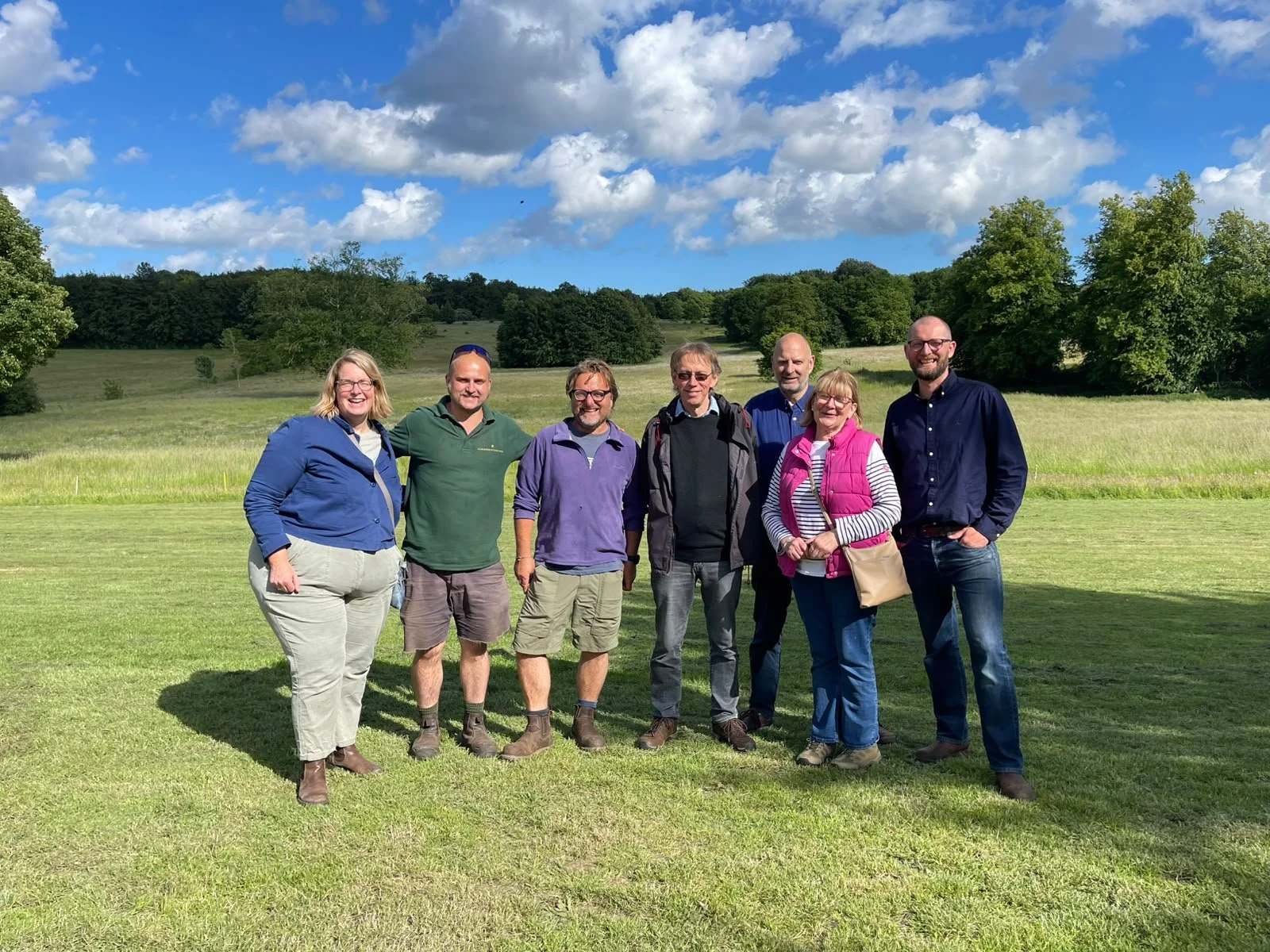
RSPB, Finches Friend & Goodnestone Park Gardens
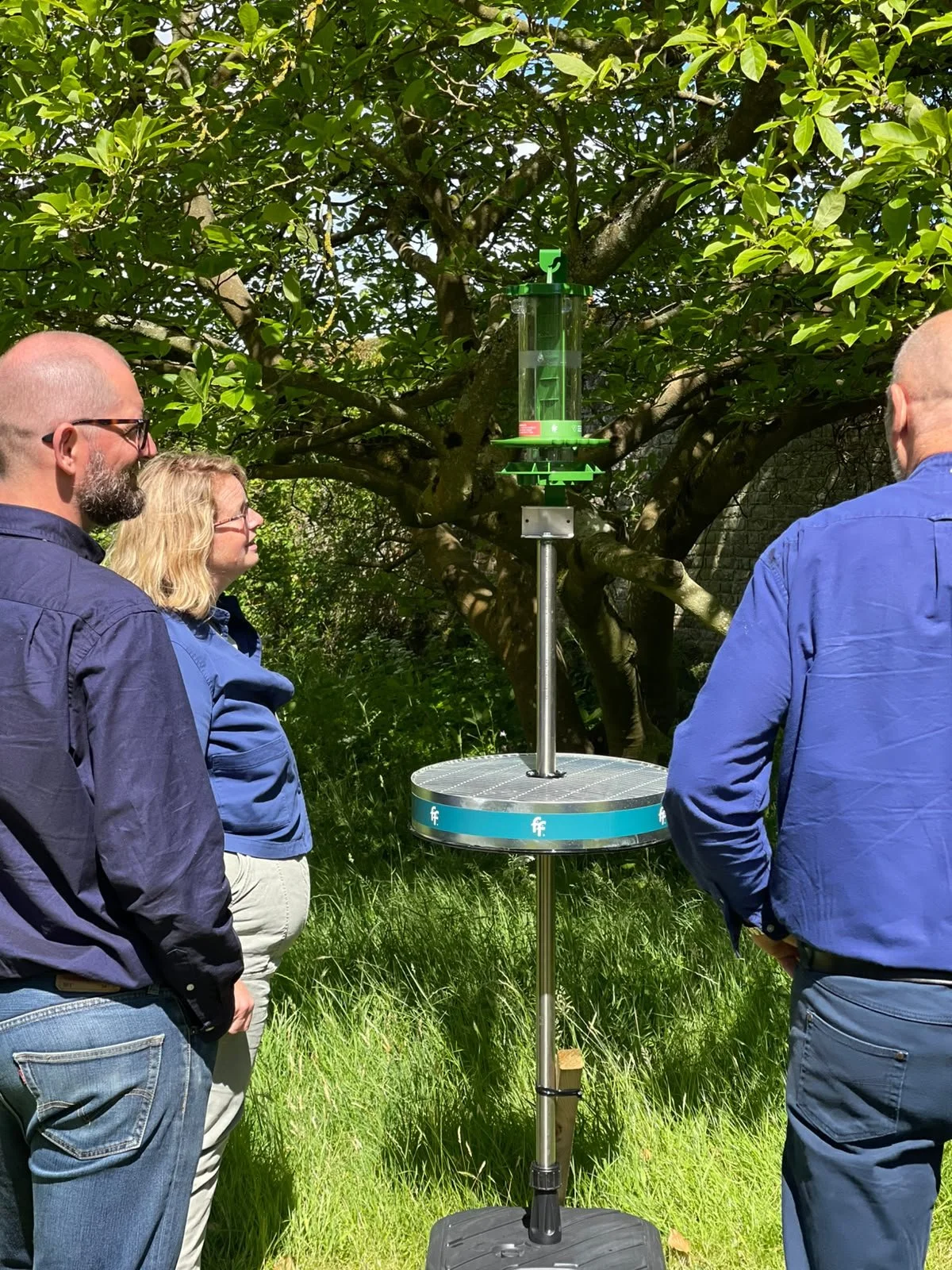
Discussing the Cleaner Feeding Centre, modular solution
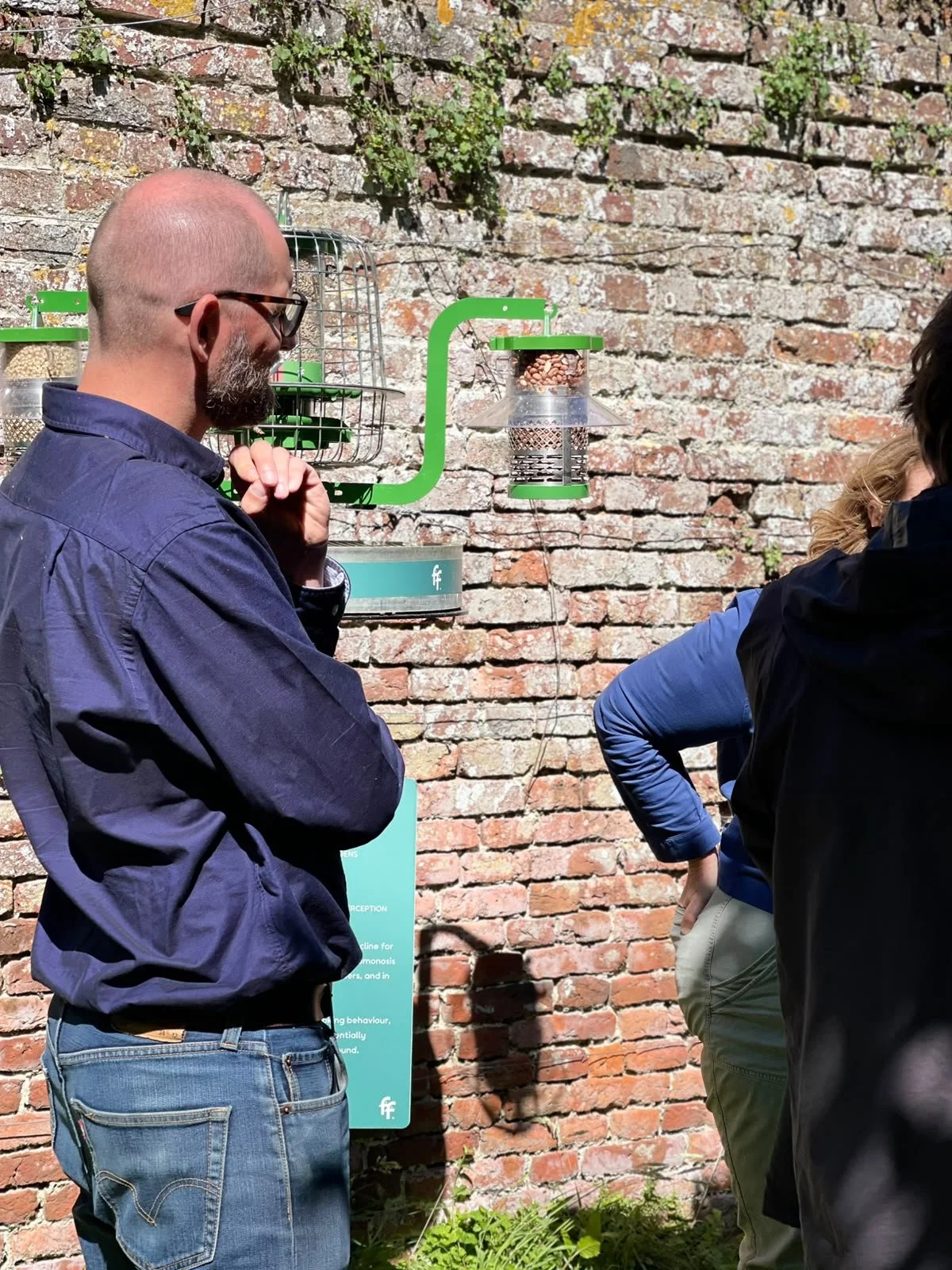
Andrew in the way of the Cleaner Feeding Centre, with multiple feeders, and ZIG guard attached
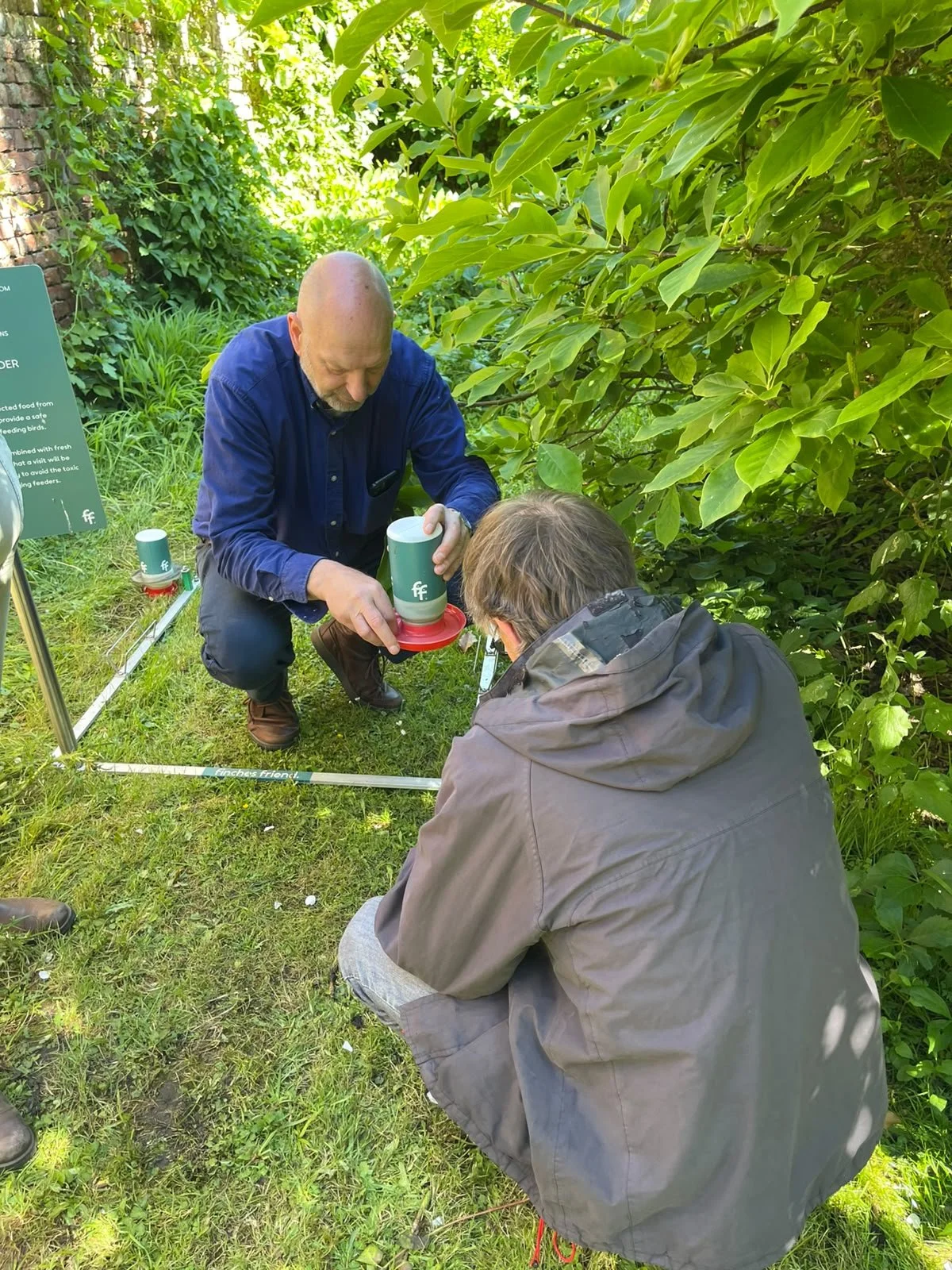
Ideas for ground feeding and safe water provision
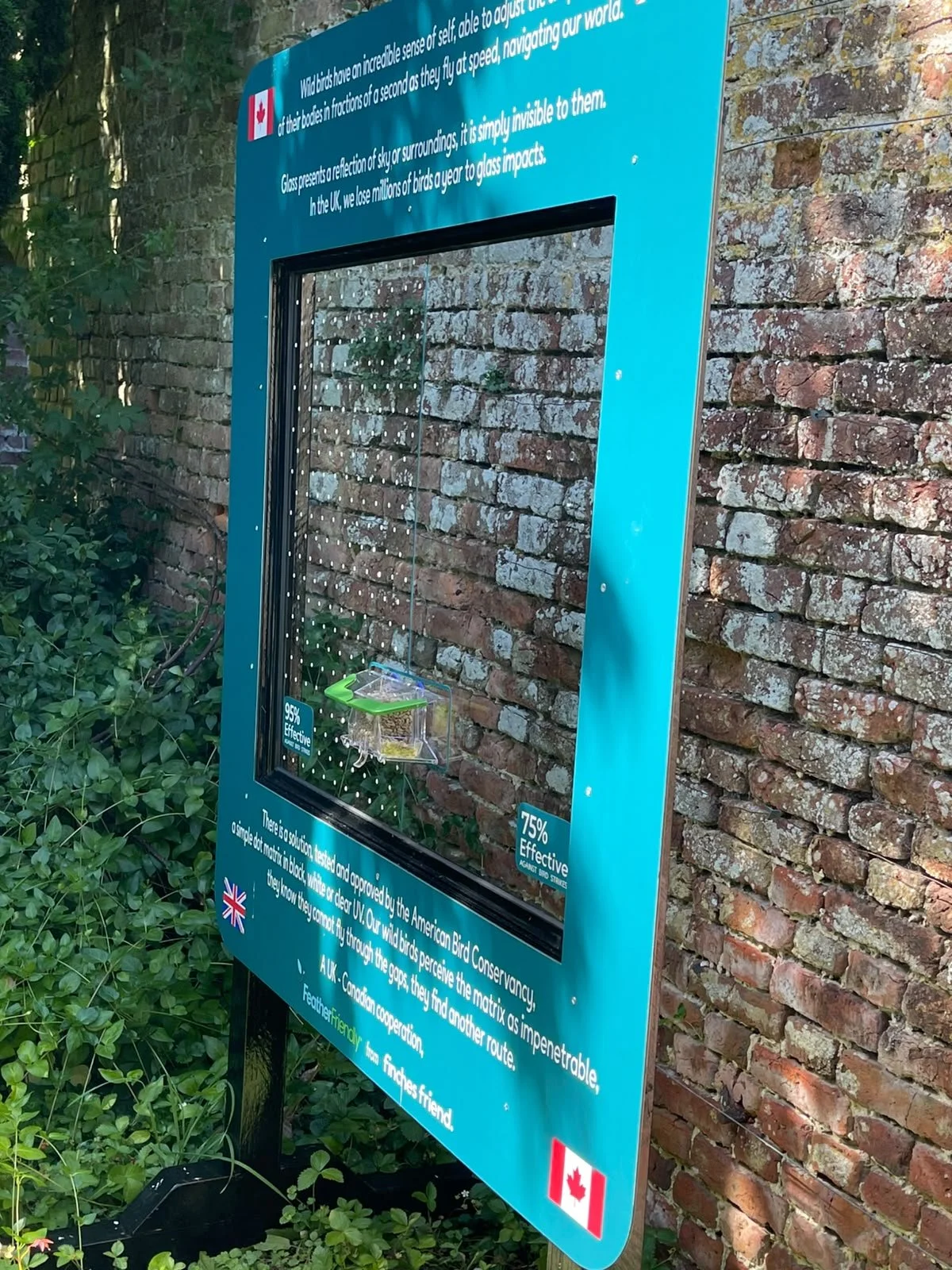
Demonstrating the Feather Friendly bird strike options